
BioZone Principal Investigators are professors in the Faculty of Applied Science and Engineering at the University of Toronto, leading research teams working on pressing problems in industrial and environmental biotechnology.
BioZone Core Principal Investigators - from L-R: Grant Allen, Krishna Mahadevan, Chris Lawson, Elizabeth Edwards, Levente Diosady, Emma Master, and Brad Saville. Not pictured: Rachel Gregor

Core Principal Investigators

Prof. Master is the Academic Director of BioZone. Her research focuses on functional genomics, protein engineering and production, and the development of enzyme cascades that tailor the chemical and mechanical properties of renewable plant fibre for their broader use in sustainable textiles, resins and bio-derived chemicals.
In addition to her position in the Department of Chemical Engineering and Applied Chemistry, she is an Adjunct Professor at Aalto University (Finland).

Prof. Edwards was BioZone's founding Academic Director and is the Canada Research Chair in Anaerobic Biotechnology. Her research interests include anaerobic microbial communities for use in groundwater decontamination and anaerobic digestion, and makes use of metagenomic analysis to determine the mechanisms of these processes.
She is the recipient of an NSERC Synergy Award for Innovation and a Killam Fellowship from the Canada Council for the Arts, and was named an Officer of the Order of Canada in 2020.

Prof. Mahadevan is a professor and Canada Research Chair in Metabolic Systems Engineering in the Department of Chemical Engineering and Applied Chemistry. His research group applies techniques from systems biology, synthetic biology, and machine learning to understand and engineer the metabolism of microbes, with particular emphasis on bio-based production of chemicals and fuels.
Together with trainees, he has co-founded several companies to commercialize research from his lab.

Prof. Allen is the Frank Dottori Chair in Pulp and Paper Engineering at the Department of Chemical Engineering and Applied Chemistry. His research interests include bioprocess engineering, including biological treatment of waste from the pulp and paper industry, as well as algae-based bioreactors for resource recovery and pollution remediation.
In 2024, he won the R.S. Jane Award from the Canadian Society for Chemical Engineering for his contributions to chemical engineering in Canada.

Prof. Lawson joined the Department of Chemical Engineering and Applied Chemistry in 2021. His research interests focus on understanding and engineering microbial communities, using basic microbial ecology and an understanding of microbiome metabolism to rationally design anaerobic microbial communities for industrial and envrionmental applications. His particular focus is on optimizing the generation of bioenergy and bioproducts, such as medium-chain fatty acids, using wastewater as a carbon source.
Prof. Lawson was recently presented with the Department's Bill Burgess Award for teaching excellence in large classroom settings.
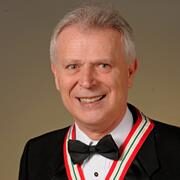
Prof. Diosady is Emeritus Professor of Food Engineering in the Department of Chemical Engineering and Applied Chemistry at U of T. His research interests include oilseed processing, membrane processes, extrusion, advanced separation processes, and micronutrient fortification of food. He is the author of over 200 publications in refereed journals, including 25 patents, and has won multiple national and international awards for his work.
His research on micronutrient supplementation, supported by Nutrition International and the Bill and Melinda Gates Foundation, has had positive health impacts on tens of millions of people in both the developing world and Canada. He was named an Officer of the Order of Canada in 2019.
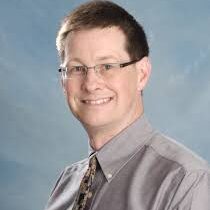
Prof. Saville is a professor in the Department of Chemical Engineering and Applied Chemistry. His research interests focus on life-cycle assessment and technoeconomic assessment in bioproducts and biofuels, especially sustainable aviation fuel (SAF) created from bio-based sources. He also studies the GHG impacts of carbon capture and storage technologies in the biofuels sector, as well as the isolation of probiotic polysaccharides from plant sources.
Prof. Saville is an active entrepreneur and consultant in chemical and biochemical process engineering.

Prof. Gregor is BioZone's newest Core PI, and joined the Department of Chemical Engineering and Applied Chemistry in 2025. Her research involves engineering chemical interactions in microbial communities for environmental and industrial applications, with a focus on the role of metabolites and natural products in regulating community activity, especially in marine environments.
Her work combines mass spectrometry and chemical biology with modern microbiology methods, bioinformatics, and environmental sampling.
Associate Principal Investigators
BioZone Associate PIs collaborate with Core PIs in areas of mutual interest. Associate PIs also jointly supervise students, participate in co-curricular learning opportunities, and sometimes share lab space with BioZone Core PIs.
- Nikolai De Martini (ChemE)
Role and fate of inorganics in the industrial processing of biomass and biomass derived wastes - Aled Edwards (SGC)
Open science, and structural and chemical biology approaches to uncovering new protein functions - Michael Garton (BME)
Integration of computational protein design techniques with high-throughput experimental methods - Frank Gu (ChemE)
Nanotechnology for environmental remediation and pharmacological applications - Benjamin Hatton (MSE)
Biologically inspired materials and surface structures - Freeman Lan (BME)
High-throughput experimental methods to study complex biological systems, including microbiomes
- Alison McGuigan (ChemE)
Tissue engineering for understanding tumour growth processes - Emily Moore (ILead)
Engineering leadership education, and application of system mapping frameworks to establish sustainable manufacturing ecosystems - Mohamad Moosavi (ChemE)
Artificial Intelligence for chemical science and materials design - Hani Naguib (MSE)
Manufacturing of programmable materials including biologically inspired materials - Vladimiros Papangelakis (ChemE)
Aqueous and environmental process engineering for water purification and hydrometallurgy - Hui Peng (Chemistry)
Analytical techniques to investigate the interface between chemistry and biology
- Dana Philpott (Immunology)
Infectious diseases and the gut microbiome - Benjamin Sanchez (ChemE)
Design, development and application of computational tools that enable molecular discoveries including new protein catalysts - Barbara Sherwood Lollar (Earth Sciences)
Environmental chemistry and analysis of subsurface water quality and hydrogeology - Brent Sleep (CivMin)
Soil and water remediation and the modelling of environmental processes - Simon Stern (Law)
Innovation law and evolution of legal doctrines - Nicole Weckman (ChemE / CGEN)
Biological and biochemical sensor design for point-of-care diagnostics - Jay Werber (ChemE)
Membrane separations, purification processes, and associated transport phenomena
Founding Principal Investigators
In addition to BioZone's current Core PIs, Profs. Alexei Savchenko (Univ. of Calgary) and Alexander Yakunin (Bangor Univ.) were a key part of launching BioZone.